


Notes from the The Lost Republic
Updated: May 24
What Havana tells us about the world the Republic inherited
This is the first of what I expect will be several forthcoming articles from the research desk of The Lost Republic — Cuba, 1902–1959, the documentary in which Carolina Calzada and I are now fervently working with our collaborators. I want to keep our friends close to the work as it unfolds, because a film like this one is built slowly, document by document, and the finds along the way are often as revealing as the finished frame. This is one of those finds.
We are creating the film around the Palacio Presidencial of Havana, the seat from which the Republic narrated itself for fifty-seven years. But you cannot study one building in Havana without the others. Research is a kind of excavation — you come looking for one room and find yourself lost in another as in a rabbt hall or un sueño habanero. That is what happened this week.
A document reached us: a volume from the Cuadernos de Historia Habanera, the series published under Emilio Roig de Leuchsenring, Havana's great City Historian. It is not about the Palacio Presidencial as we were hopping, although the building is mentioned. It is about another structure next door in spirit — the old Casa de Gobierno, the Palacio Municipal, the Ayuntamiento on the Plaza de Armas, the seat of city government that today houses the Museo de la Ciudad. And buried in its pages is an inventory that stopped me cold.
I want to be precise, because precision is the whole discipline of this kind of work: the artworks I am about to describe belong to the Ayuntamiento, not to the Presidential Palace. But they tell us something the film urgently needs to convey — the caliber of the artistic world into which the Cuban Republic was born. A city that hung these works in its halls of government was not a provincial outpost. It was a capital that understood itself as part of the conversation of world art. That inheritance is the soil our film grows in.
Consider what the Ayuntamiento held.
In 1880, Miguel Aldama (sic) donated a group of works of startling ambition. Two large canvases on the conquest and colonization of the Americas: one depicting Hernán Cortés burning his ships in Mexico, by the Spanish painter Francisco Sans i Cabot [VERIFY — possibly Francesc Sans Cabot]; the other the landing of the Mayflower pilgrims on Plymouth Rock — the Saxon colonization of America set beside the Spanish — by the Belgian painter Baron Gustaf Wappers. The two paintings faced each other as the two colonizations of a hemisphere.

And in the same donation, two marble bas-reliefs — Day and Night — by Bertel Thorvaldsen, the Danish master, the sculptor whose name belongs beside Canova in the story of European neoclassicism. Thorvaldsen's Day and Night are among the most reproduced reliefs in the history of sculpture. That a version of them hung in the antechamber of Havana's city hall is the kind of fact that rearranges your sense of a place.

There was more. The Death of General Antonio Maceo, acquired in 1909, by the Cuban painter Armando G. Menocal — and here a thread pulls taut, because Menocal is the very painter whose frescoes we are studying in the Presidential Palace. The hand that painted Maceo's death for the city is the hand that painted the Republic's memory onto our Palacio's ceilings. A portrait of Christopher Columbus, donated by the Duke of Veragua — a descendant of Columbus — in 1796. And 104 oil portraits of Cuban patriots by the Cuban painter Federico Martínez, acquired in 1910.
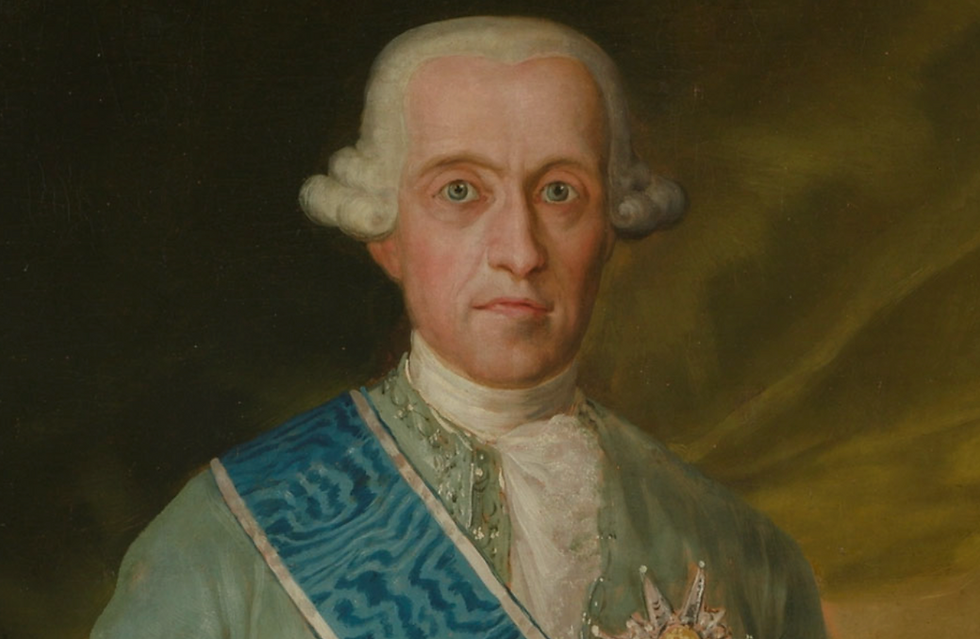
A Thorvaldsen. A Wappers. A Columbus given by Columbus's heir. This was the artistic furniture of governance in Havana.
Now hold that beside the question our film is really asking.
If this is what the city's seat of government held, what did the Republic's seat — Palacio Presidencial, inaugurated around 1920 — gather to itself? What did the young nation choose to put on the walls of the house it built to narrate itself into being? That is the inventory we are now hunting, and it is exactly the kind of thread our architectural consultant, Victor Deupi, and our researchers in Havana will help us follow.
The Ayuntamiento's treasures are not our subject. But they are our measure. They tell us the altitude at which Havana's public art operated, so that when we open the doors of the Palacio Presidencial, we will know what kind of inheritance we are walking into.
This is what I mean by peeling the layers. Every document opens onto another. The conquest enters our film through what the Republic chose to remember of it; the Republic enters through the art it gathered and the art it inherited; and the inheritance, it turns out, reaches back through Thorvaldsen and Wappers to the whole nineteenth-century idea that a Caribbean capital could hold its own in the company of European masters.
We are at the beginning of this exploration. I will share what we find as we find it. If you have knowledge of these works — where they are now, what survives, what the Presidential Palace itself contained — write to us. A film like this one is, in the end, a collective act of remembering, and the memory we are after is partly yours.
More soon!


Comments