


HERITAGE FILM PROJECT IN ASSOCIATION WITH
DOCUMENTARY FILM FUND PRESENTS
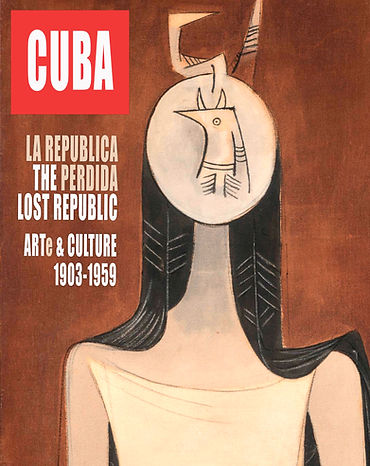
THE LOST REPUBLIC | LA REPUBLICA PERDIDA
A FILM MADE POSSIBLE WITH THE SUPPORT OF THE
CUBAN HERITAGE COLLECTION AND CASA CUBA
ACADEMIC ADVISORS VICTOR DEUPI AMANDA MORENO-SHROEDER MIRELL VAZQUEZ JOSE KOZER JORGE HERNANDEZ ROSA BERLAND
EXECUTIVE PRODUCERS CAROLINA CALZADA
AND SOLEDAD LIENDO
DIRECTED BY EDUARDO MONTES-BRADLEY
The Lost Republic is a documentary film exploring Cuba's quest for a unique cultural identity following the wars of independence, with particular emphasis on literature, music, fine arts, and architecture in the years between the Spanish-American War and the end of the democratic experiment in 1959.
The Lost Republic looks at Cuba as a laboratory of sensorial — aesthetic — experiences born from the tumultuous forces reshaping the modern world. These events, and their corresponding cultural transformations, are revisited through the personal experiences and works of visual artists, composers, and writers.
This is the world of the Cuban Republic: a democratic experiment that fostered the growth and evolution of artistic movements much in the spirit of similar experiences in the United States and in Europe before the rise of authoritarian regimes. In less than six decades, Cuba had emerged as a unique cultural entity with a profound continental influence that stretched from New York to Buenos Aires.
That influence reached as far as New York, where in 1944 Cuban modern painters were introduced to a world audience at the Museum of Modern Art — and within a decade of that landmark exhibition, major cities around the world were beginning to engage seriously with Cuban literature, architecture, and cinema.
The Lost Republic rests on the work of a multidisciplinary team of collaborators and advisors who have spent decades documenting the physical and cultural evidence of the period on both sides of the Florida Strait, giving the film the scholarly grounding it demands. Of particular relevance is the support of the Cuban Heritage Collection and Casa Cuba — academic institutions that have preserved in their archives and collections the living memory that makes a film like this possible. The Lost Republic is, in no small measure, a tribute to the effort and dedication of the Cuban diaspora.
The Lost Republic aims to recuperate the collective memory of the Cuban experience through the arts — because culture is not decoration applied to the surface of history. It is the force that shapes and reshapes it. To understand what Cuba was, we must understand what it created: its music, its literature, its buildings, its paintings. These are not symptoms of the period. They are the period itself.