


Tango, Vice, and Life After Midnight in Buenos Aires and New York.
Updated: Mar 15
Once my parents went to sleep, I would pull slacks over my pajamas and walk the three blocks to Caño 14. Inside, legendary figures like Aníbal Troilo—“Pichuco”—and Roberto Goyeneche held court in front of an audience of true connoisseurs, old-timers. Tango wasn’t yet a tourist attraction. Evita was still buried under another name in a cemetery in Milan. Life felt simpler.
There were drugs, of course. At twelve, I didn’t really understand why someone would snort white powder. Goyeneche once told me it was to keep from sneezing on stage. I didn’t understand much, but I understood allergies.

Caño 14 drew all kinds of shadowy characters. Married men on discreet dates. Working girls who carried an extra pair of shoes and changed into them the moment they walked in. To dance tango you needed the right shoes—not the stylized tango footwear you see today, but high heels. Girls without stockings would draw a vertical line down the back of their legs with a makeup pencil to fake nylons.
Seeing Anibalk Troilo play the bandoneón was a religious experience. During breaks I would sit at the small table set up on the sidewalk along Talcahuano Street, reserved for Goyeneche and his friends.
I was lucky my parents never woke to find my bed empty.
Besides Troilo and Goyeneche, there were other players—the group was often a sextet. Some were regulars; others filled in for those on tour. Many were classically trained, educated in Buenos Aires or Paris. Caño 14 was only a few blocks from the Teatro Colón, the city’s grand opera house. Some of these musicians were members of its orchestra, earning extra pesos at the club. Though I doubt they were there for the money—the symphony paid well. I suspect they loved the atmosphere: the women, the excess, the cigarette smoke, la noche.
Before the final set, I would slip home and back into my room, hoping the smell of tobacco in my hair would go unnoticed. A few hours later I would fall asleep in class, pretending I had spent the night studying Mendeleev’s table of elements.
Now, as I try to reconstruct life in New York in the mid-nineteenth century, those memories return to me. I look forward to my on-camera conversation with Dale Cockrell, author of Everybody’s Doin’ It: Sex, Music, and Dance in New York, 1840–1917. He writes about musicians who performed the great European masters in elite halls and, later that same evening, played in saloons on the Lower East Side—earning a few extra dollars and perhaps seeking something else.
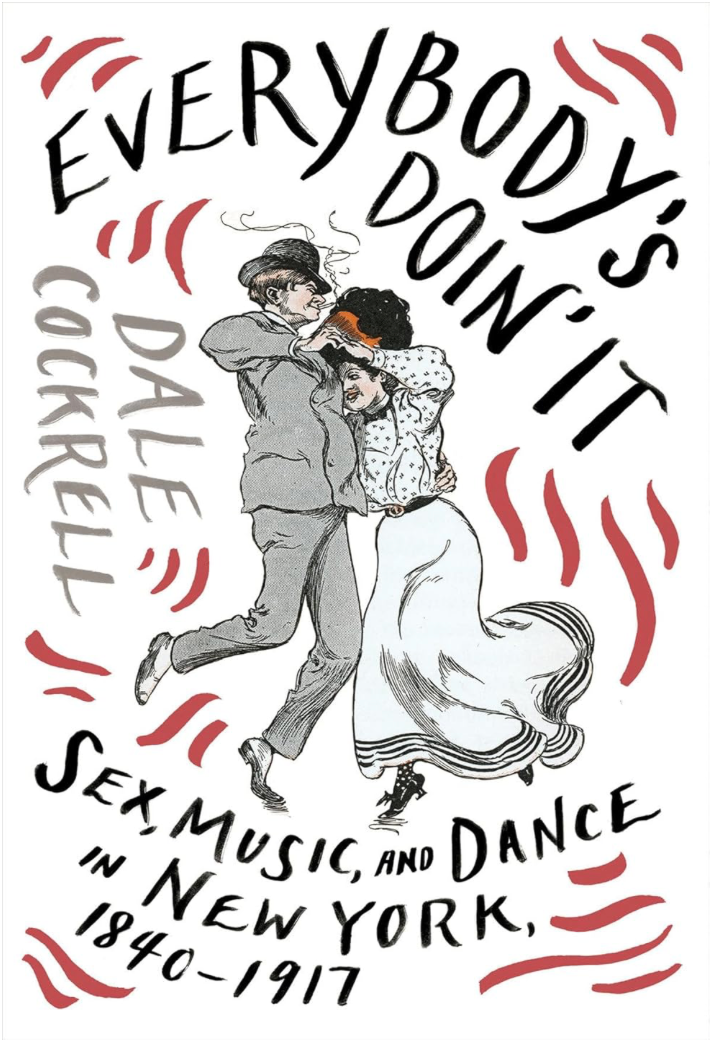
That exchange fascinates me. Class, gender, propriety, vice—they were not separate worlds. They overlapped. The same hands that performed Beethoven on Broadway and Canal Street might play dance music in Five Points hours later. Just as in Buenos Aires, music flowed between institutions and dives, between opera houses and smoky rooms.
It is in that tension—between refinement and excess, respectability and appetite—that Life and Music in the Era of George Frederick Bristow finds its footing.
Support the Documentary Film Fund
If this story resonates with you, please share it, leave a comment below, and subscribe for updates.
Our documentary work is made possible through the support of the Documentary Film Fund, a 501(c)(3) nonprofit dedicated to bringing stories like this one to the screen. Your contribution — at any level — helps preserve and share the cultural legacies that might otherwise be lost.
👉 Support the work: please visit Documentary Film Fund link and donate if you can.


Comments