


George Bridgetower at Cambridge
When we think about George Augustus Polgreen Bridgetower (1778–1860), we tend to leap from the child prodigy who performed in Paris before an audience that included Thomas Jefferson, to the 1803 Vienna premiere of Beethoven’s Violin Sonata No. 9 in A major, Op. 47—the work later rededicated as the “Kreutzer” Sonata after the famous falling-out between the two musicians.

Yet between these milestones lies a rich, formative English chapter that reveals Bridgetower’s deep commitment to musical scholarship amid an already demanding professional life.
Roots in Haydn’s World
Sources differ on his birth date—variously given as 1778, 1779, or February 29, 1780—and while it is firmly established that he was born in Poland to a Polish European mother and a father of African descent, the father’s precise origins remain debated, with references ranging from Abyssinia to the Caribbean. What is unquestioned is Bridgetower’s Afro-European identity and the extraordinary circumstances that brought him into elite musical circles.
It is worth noting that Bridgetower was not alone in this regard. Other musicians of African descent were active in overlapping European cultural spheres as virtuosi, composers, and intellectual figures—among them Joseph Bologne, Chevalier de Saint-Georges; Ignatius Sancho; Joseph Emidy; and Angelo Soliman, and, in the following generation, Samuel Coleridge-Taylor. As we continue to trace Bridgetower’s path, it is important to remember that while such trajectories were rare, they were not entirely exceptional within Enlightenment-era Europe.
During Bridgetower’s early childhood, his father was associated with the household of Prince Nikolaus I Esterházy, whose court employed Joseph Haydn. The Esterházy estates maintained an opera house, a private orchestra, and a constant stream of new compositions. Growing up in this environment, Bridgetower was immersed in one of the most sophisticated musical ecosystems in Europe. Contemporary advertisements later billed him as “a pupil of the worthy Haydn”—language Foster notes should be read as promotional rather than literal, reflecting proximity, exposure, and influence rather than formal instruction.
A Child Prodigy on the European Stage
Bridgetower’s public debut came in April 1789 in Paris, where he performed to enthusiastic reviews. That same year, accompanied by his father, he appeared in London, Bath, and Brighton, quickly attracting royal attention. A concert in Bath attended by King George III was described as “an exquisite performance,” cementing his reputation.
By 1791, at approximately eleven years old, Bridgetower was placed under the protection of the Prince of Wales (the future George IV), who appointed tutors and integrated him into his private musical establishment. Bridgetower would serve as first violinist in the Prince’s private orchestra for fourteen years, while also maintaining an active public career as a soloist.
George Bridgetower at Cambridge
After settling permanently in London in 1789, Bridgetower became a fixture of the city’s musical life. He appeared in more than fifty major concerts, taught violin and piano to elite pupils, and moved with ease between courtly patronage and public performance. It was during this sustained English period—not during his better-known continental tours—that Bridgetower pursued formal academic recognition.
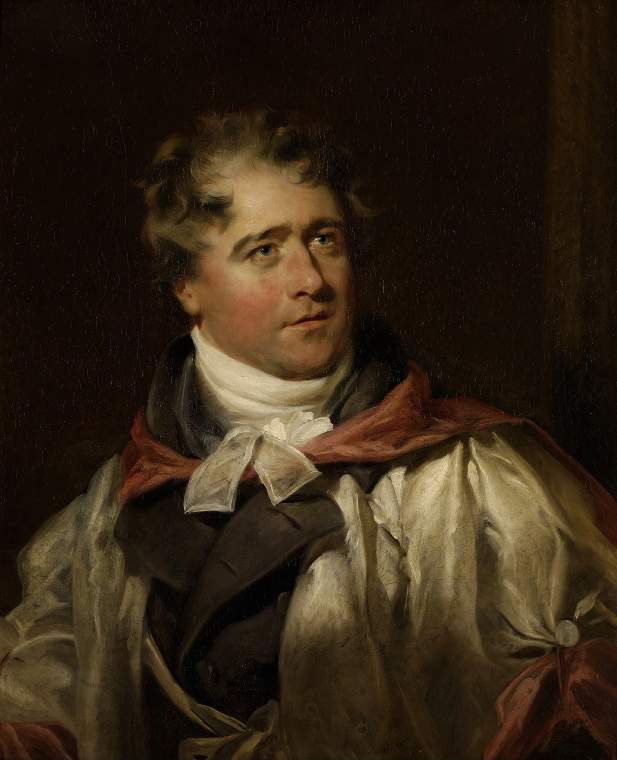

Here, Catherine Foster’s work helps illuminate a crucial pedagogical lineage. Bridgetower’s most influential mentor in England was Charles Hague (1769–1821), Professor of Music at the University of Cambridge. Hague had studied violin with Johann Peter Salomon, the impresario who brought Haydn to England in the 1790s and oversaw the premieres of the celebrated “London” Symphonies. A composer and prolific arranger of Haydn’s works, Hague organized more than fifteen concerts in Cambridge between 1795 and 1811 that featured Bridgetower prominently.
Their relationship was personal as well as professional: in 1805, Bridgetower presented Hague with a portrait miniature of himself, a gesture of gratitude and friendship that underscores the seriousness with which he approached his studies.
Under Hague’s encouragement and supervision, Bridgetower pursued a Bachelor of Music at Trinity Hall, Cambridge—one of the university’s oldest colleges, founded in 1350. The degree was non-residential and designed for established professionals, allowing Bridgetower to remain active in London while meeting Cambridge’s rigorous requirements.
In June 1811, he earned the degree by submitting an original “exercise,” an extended choral-orchestral anthem performed publicly on 30 June at Great St. Mary’s Church before the university and its newly elected Chancellor. Contemporary reviews praised the richness of the writing and singled out the beauty of its trio section. Like many of Bridgetower’s compositions, the manuscript has since been lost—an absence that continues to haunt his legacy.
Beyond the Beethoven Myth
Bridgetower’s later life remains only partially documented. He continued to perform, taught music, traveled frequently to Italy, and composed, though much of his output has not survived. He was elected to the Royal Society of Musicians in 1807, and died in London on February 29, 1860, where he is buried in Kensal Green Cemetery. A portrait of Bridgetower is preserved in the collection of the British Museum.
This English and academic chapter complicates the familiar image of Bridgetower as merely Beethoven’s brilliant but discarded collaborator. As Foster’s research helps make clear, he was also a disciplined scholar, a professional deeply embedded in Britain’s musical institutions, and a composer whose ambitions extended beyond virtuosity.
In an era shaped by Enlightenment ideals and growing abolitionist arguments about universal human capacity, Bridgetower’s Cambridge degree stands as evidence not only of his personal discipline and artistic seriousness, but of a cultural moment in which Black intellectual achievement could be recognized—if still precariously—within Europe’s most established institutions.
Today, Trinity Hall honors Bridgetower with a dedicated room and ongoing research into his legacy—a fitting acknowledgment that some of the most consequential musical histories unfold not in moments of rupture, but in sustained commitment.
Updated December 25, 2025


Comments