


Documentary as Method. Edgar Morin's Prophesy
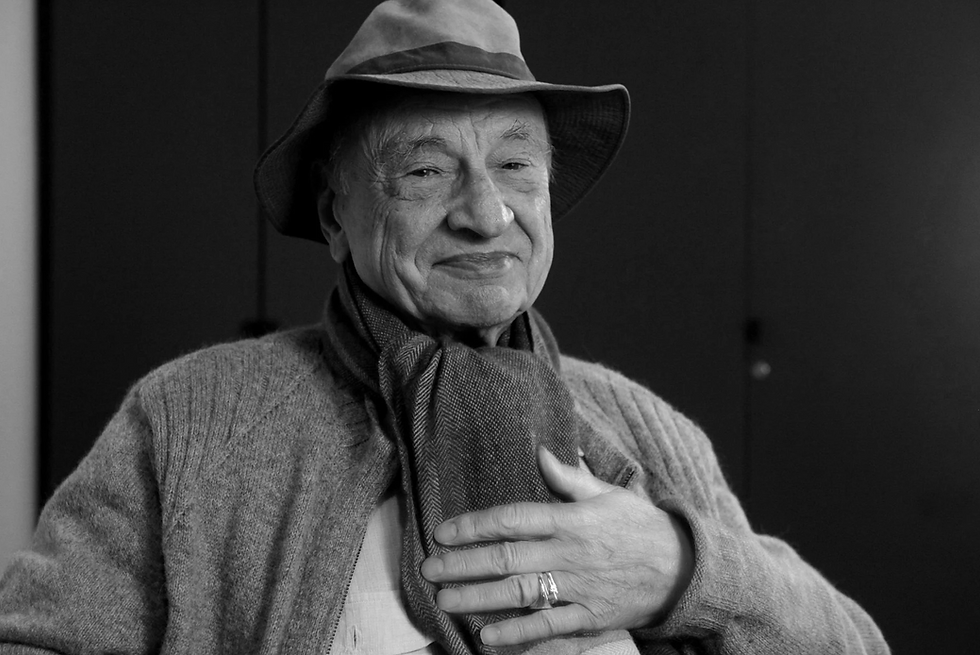
Edgar Morin died on May 29, 2026. He was 104. He spent those years arguing that the modern world had made a catastrophic mistake — not a political mistake, not a moral mistake, but an epistemological one. It had organized knowledge into separate rooms and locked the doors.
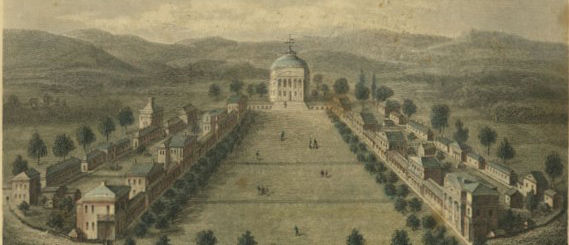
Jefferson understood the danger. When he designed the academic village at the University of Virginia, he placed the lawn at the center. The pavilions faced each other across open ground. Professors of different disciplines would encounter each other. Ideas would collide in passing. Knowledge would remain in conversation with itself.
It didn't last. It couldn't. The logic of specialization is self-reinforcing. Disciplines develop their own languages, their own hierarchies, their own definitions of rigor. A department that speaks to every other department eventually speaks with authority to none. The lawn became something entirely different. The pavilions turned inward. Jefferson's metaphor became an architectural irony — an open space surrounded by closed rooms.
"Intelligence that is fragmented,
compartmentalized, mechanistic,
disjunctive, and reductionistic
breaks the complexity of the world
into disjointed pieces, separates
that which is linked together,
and renders unidimensional
the multidimensional."
Morin diagnosed this as the central pathology of modern thought. La Méthode, his life's work in six volumes, was the autopsy. The fragmentation of knowledge into disciplines had produced experts who could not see beyond the borders of their expertise. The result was not precision. It was blindness — systematic, institutionally enforced, and self-perpetuating.
He called the alternative pensée complexe. Complex thought. Not complicated — not the mere accumulation of more variables — but thought that refuses premature resolution. Thought that holds contradiction, that reads across borders, that understands any phenomenon as the intersection of multiple systems no single discipline can contain. The academy could not produce this. Its architecture prevented it.
The pavilions could face each other across the lawn. They just stopped talking.
Documentary film can.
Not all documentary film. Not the kind that illustrates a thesis already formed, that recruits experts as footnotes to a predetermined argument. But the counter-archive — the film that recovers what institutional memory has suppressed, that introduces voices the official account never seated at the table — operates exactly as Morin prescribed, and without needing his permission.
The filmmaker answers to no dean.
Holds no departmental appointment.
The film does not submit to peer review
by specialists in the field it is examining.
This is not a weakness.
It is the condition of possibility.
In Life and Music in the Age of George Frederick Bristow, I encountered American musicology as a sealed system. Technically accomplished. Internally coherent. And profoundly unable to see the history surrounding the music it studied. The discipline had developed its own relation to the archive, its own definition of relevant context, its own boundary between what counted as musicological evidence and what did not. The result was a portrait of Bristow and his world that was accurate within its frame and radically incomplete beyond it.
By introducing voices formed outside the enclosure, the film broke that frame. Intellectuals like Joseph Horowitz who brought different national traditions, different analytical instincts, different understandings of how culture and politics and economics and race intersect with the history of music. The film seated them at the same table and let the argument run.
The resistance was instructive. At one point in the process, a musicologist with decades of experience described what was happening as being fired from the film — because a considerable portion of their argument had not survived the edit. The complaint revealed something worth pausing over. The word chosen was not edited. It was fired. Which meant the implicit assumption had been hired. Not invited to a conversation among peers, but engaged as an authority whose conclusions were, by definition, within scope of the final cut. The edit, in that understanding, was not a curatorial decision. It was a termination.
That is the silo speaking. Not in the language of epistemology, but in the language of labor and property. The discipline does not merely organize knowledge. It allocates ownership of it.
That film did not begin as a UVA project, and the resistance it met came from musicology broadly — not from any single institution. But I had seen the other face of the same coin earlier, when my work did carry institutional affiliation. Projects like Monroe Hill and Unearth and Understood found support precisely because they served a recognizable institutional purpose. The university was hospitable to complexity when complexity reflected well on the university. The architecture of Jefferson's lawn could be invoked as long as it remained a metaphor, a point of pride, rather than a genuine method for dissolving disciplinary authority.
That is the distinction that matters. Selective hospitality to interdisciplinary work is not the same thing as structural openness. It is, in fact, the more refined form of the same enclosure.
Morin was also shaped by his formation. The Resistance taught him that official accounts of reality were not merely incomplete but potentially lethal. That survival required reading obliquely, triangulating across sources, distrusting the single explanatory frame. Complexity was not a theory he developed in safety. It was a skill he acquired under pressure.
Other generations, other cities, other decades have produced the same lesson by different means. The thinker of complexity and the documentary filmmaker share a common origin: both learned that the world could not be trusted to explain itself.
Morin also predicted that the trend would worsen before it improved. That disciplines, under institutional pressure and the logic of credentialing, would contract rather than expand. That the lawn would not simply remain empty but would eventually be fenced. What I have encountered across American campuses in the years since suggests he was right. The impulse to own rather than share a field of inquiry, to treat intellectual territory as professional property rather than common ground, is not softening. It is hardening.
Jefferson's lawn has not been abandoned. It has been beautified. It serves now as a ceremonial and recreational space — a place for processions, for photographs, for institutional pride. What it no longer is, is what he designed it to be: a deliberative square where disciplines met, argued, and refused to stay in their rooms.
If this argument resonates, I'd like to hear from you.
Leave a comment, push back, or add what I've missed.
And if you want to continue the conversation, subscribe to
The Journal — that's where the dialogue lives.
Eduardo Montes-Bradley

Comments