


Unearthed and Understood: Slavery at the University of Virginia
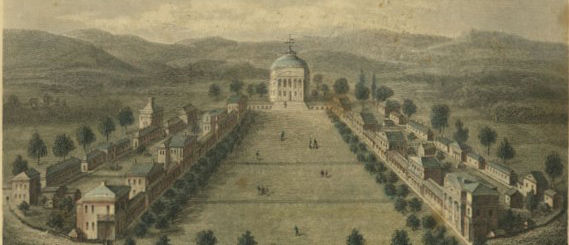
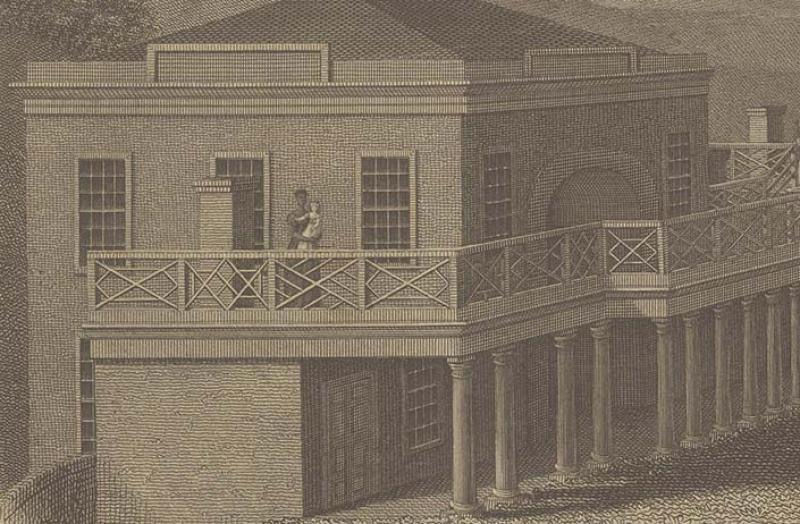
The University of Virginia was founded by Thomas Jefferson. The day it opened its doors, between ninety and one hundred and twenty enslaved people were living on grounds. They cooked. They cleaned. They built. They served the students and faculty in the pavilions along the Lawn. Individual students, prohibited from bringing their own enslaved people to Grounds, simply rented them from Charlottesville. One faculty member — a German scholar brought to teach modern languages — owned a considerable number of enslaved people, who worked in the stone room beneath the pavilion where he lived and taught.
None of this was secret. All of it was insufficiently examined. This documentary, commissioned to Montes-Bradley by the University of Virginia's President's Commission on Slavery and the University, was an attempt to begin the examination on film.
A National Movement, A Local Reckoning
The University of Virginia's investigation into its relationship with slavery did not emerge in isolation. It was part of a wave of institutional self-examination that had been building across American higher education for more than a decade, a wave whose origins can be traced directly to one institution and one decision.
In 2003, Brown University President Ruth J. Simmons appointed a Steering Committee on Slavery and Justice and charged it with investigating the university's historical relationship to the transatlantic slave trade. The report that followed, published in 2006, was groundbreaking — the first time a major American university had publicly catalogued its ties to racial slavery with that degree of rigor and transparency. Brown was among the first institutions of higher education in the United States to publicly catalogue its ties to racial slavery, and its Slavery and Justice Report has served as a national model for responsible scholarship.
The 2006 report sparked a national discussion on higher education's entanglements with slavery, inspiring similar reckonings at more than 100 other colleges and universities. By the time the University of Virginia launched its own commission, the work at Brown had already demonstrated both what was possible and what was necessary. A passage on a University of Virginia website reads: "Frankly, Brown was the institution that inspired all of us to begin our work."
The UVa commission was launched with a specific deadline in mind: the university's bicentennial, beginning in 2017. President Teresa Sullivan, who introduces and concludes this documentary, was direct about the intention. Before the university celebrated two hundred years of existence, she wanted this part of its past unearthed and understood. The phrase became the film's title.
Jefferson's Contradiction
No figure in American history embodies the central contradiction of the nation's founding more completely than Thomas Jefferson. He wrote that all men are created equal. He owned more than six hundred enslaved people over the course of his lifetime. He founded a university dedicated to the life of the mind on land worked by people who were legally defined as property.
The scholars and community voices gathered in this film grapple with that contradiction honestly, refusing both easy condemnation and easy absolution. Several acknowledge that judging historical figures entirely by contemporary moral standards is a form of anachronism — that every era has its own moral atmosphere, its own available information, its own constraints on what could be imagined or acted upon.
But they also insist that this acknowledgment cannot become a mechanism for evasion. There is, as one voice in the film puts it, something inside each of us that knows instinctively what goes too far. Slavery went too far. Jefferson knew it went too far. He said so, repeatedly, in private correspondence he never published. The contradiction was not invisible to him. He chose to live inside it anyway. And the university he founded was built, in part, on the labor of people he and his colleagues held in bondage.
Jefferson personifies, as the film makes clear, all the kindred contradictions of a nation that declared liberty as its founding principle while codifying enslavement into its legal and economic structure. Understanding the university requires understanding that contradiction — not resolving it, but holding it fully.
What the Ground Holds
Among the most significant findings documented in the film is the discovery of a burial ground.
A researcher involved in a project examining the university's cemetery identified previously unknown graves adjacent to and north of the official burial ground. The evidence — documentary sources from the late nineteenth century, the spatial relationships of the graves, the presence of family units including children and young adults — pointed to one conclusion: this was the burial ground of the enslaved community of the University of Virginia. Families. Children. People who had lived and worked on these grounds and died here, and whose resting place had been outside the official boundary, unmarked, unknown, unrecorded in the university's institutional memory.
The discovery carried a particular resonance. In slavery, the researchers observe, death was one of the few moments when enslaved individuals could exercise something approaching control over their own lives — through ceremony, through ritual, through the communal act of burying their dead according to their own customs and beliefs. In those moments, something of agency survived the institution that otherwise denied it. The burial ground was evidence of that agency. It had been there all along, waiting to be found.
Photography did not exist when these men, women, and children lived. It only entered widespread use after emancipation. The visual record of their lives is nearly empty. The ground holds what the archives do not.
From Objects to Subjects
The conceptual work at the heart of the commission — and of this film — is a shift in the narrative framework through which enslaved people are understood.
For most of American historiography, enslaved people appeared in the record as objects: as entries in account books, as names on property lists, as labor counted and valued in the same columns as tools and livestock. They were present in the archive only insofar as they were useful to the people keeping records. Their inner lives, their relationships, their grief and love and resistance, the communities they built within the bonds of enslavement — all of this was invisible to the institutions that documented their existence.
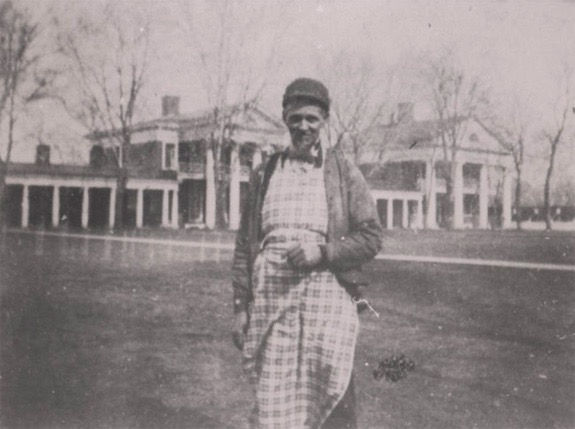
The commission's work, and the work of the researchers, oral historians, and community members featured in this film, is to move enslaved people from the position of objects to the position of subjects — to restore agency, specificity, and humanity to people who were systematically stripped of all three.
This means identifying names. It means tracing family connections. It means going into the community, into the churches where formerly enslaved individuals worshipped after emancipation, into the oral traditions that have carried partial memories across generations. Several voices in the film speak with particular urgency about the descendants — the members of Charlottesville's African American community who are, in many cases, almost certainly related to the people buried in that cemetery and the people who labored on these Grounds. They are still here. Their history is the university's history.
The Pavilions and the Stone Room
The physical spaces of the Lawn that Jefferson designed — those celebrated pavilions that generations of architectural historians have praised as among the finest examples of neoclassical design in America — contained, at their foundation, stone rooms where enslaved people worked.
Downstairs, in one of the original pavilions, the stone cooking area remains. The brickwork is original. Enslaved people worked there. The professor above lived in elegant rooms while the people who fed his family lived and labored in the half-underground space beneath his feet.
This is not metaphor. It is the literal physical structure of the place. The beauty and the bondage were built into the same walls.
Students beat enslaved people so badly that the university formally chastised them — and then declined to impose any real punishment, because the beaten person was, under law, property. A property owner cannot be meaningfully punished for damaging his own property. The legal logic was seamless. The moral reality was monstrous.
Resistance From Within
Not everyone at the university welcomed the commission's work. The film does not conceal this. There were conservative voices on the faculty and in the administration who felt that the investigation was unsuitable, that other priorities deserved the university's attention and resources.
The commission pressed on. Its argument was simple: a university that has always been historically minded about its past cannot selectively exclude the parts of that past that are uncomfortable. The history of slavery at the University of Virginia is not a footnote to the university's history. It is woven into the foundation. The Lawn was built by enslaved people. The earliest faculty owned enslaved people. The earliest students rented them. Excluding this from the university's self-understanding is not neutrality. It is a choice to perpetuate a particular kind of forgetting.
One voice in the film offers a caution against what it calls progressivist narratives — the reassuring story that things have consistently improved, that history is an arc bending toward justice, that the distance between the past and the present is sufficient evidence that the work is done. Progress has been made. But moral progress is slow, fitful, and easily reversed. The commission's value lies partly in its insistence on looking soberly at how sluggish that progress has actually been.
Unsilencing the Silent
The phrase that closes the film — and that gives this post its emotional center — belongs to one of the researchers: unsilencing the silent.
It captures exactly what the work is. The enslaved community of the University of Virginia was not simply forgotten. It was silenced — actively, systematically, through the legal structures of slavery that denied personhood, through the institutional practices that kept names out of the official record, through the architectural choices that put the stone rooms below ground and the faculty parlors above. The silence was constructed. Undoing it requires construction of a different kind: research, oral history, archaeology, community engagement, and the particular kind of attention that refuses to accept absence as an answer.
The commission proposed concrete steps: physical monuments, scholarships — perhaps one for each of the sixty-seven confirmed burials, with the knowledge that many more remained unidentified — professorships, interactive educational media in the Rotunda visitor center, and the incorporation of this history into the very fabric of the university's ongoing life.
The film ends with President Sullivan's closing remarks and with the bell of the Rotunda. The work, she says, is just beginning.
She is right. A commission can open the archive. A documentary can put faces and voices to the inquiry. But the deeper work — of truly integrating this history into what a university believes itself to be — is generational. It requires every incoming class to understand that the ground they walk on was shaped by people whose names they are only now beginning to learn.
Unearthed and Understood: Unsilencing the Enslaved at the University of Virginia was commissioned by the President's Commission on Slavery and the University of Virginia and produced by Heritage Film Project, directed by Eduardo Montes-Bradley.
The complete film is available on YouTube


Comments