


The Lens, Not the Library. A conversation, and an old quarrel with Borges
Updated: May 18
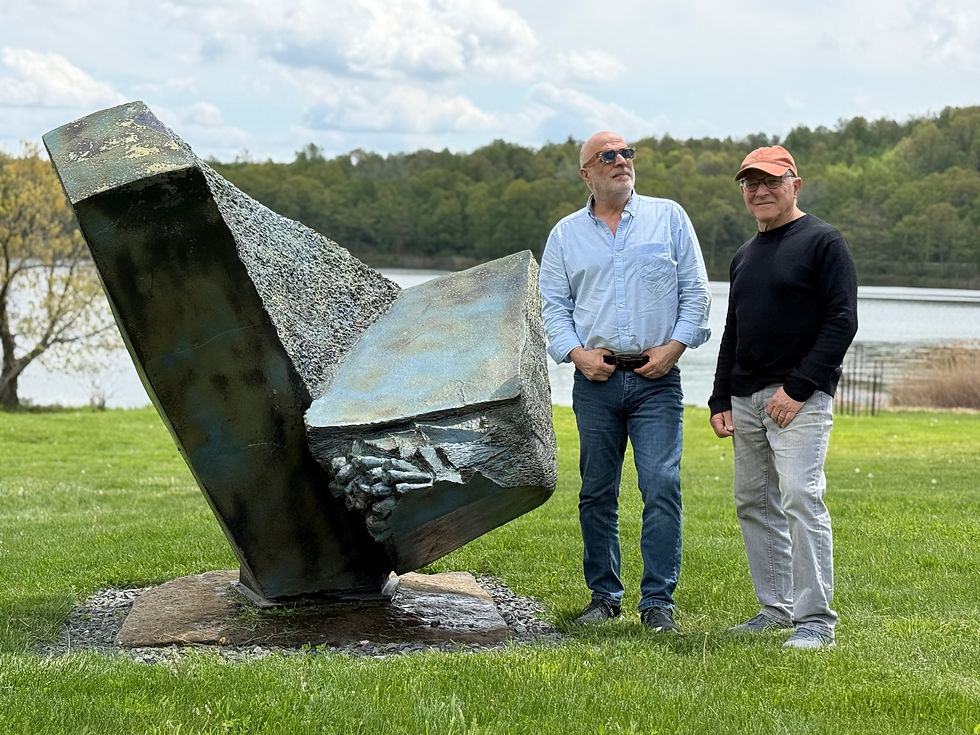
Aventura, Florida -- I ran into Rabbi Mario Rojzman. We talked about the Torah, and Mario said something simple but large: that the Torah contains within it every possible human relationship, every circumstance, every rupture and covenant. Not because it was written to predict the future, but because it articulates the foundational patterns of human life itself. The though staued with me.

The argument is not the same as saying everything has been written. It is saying that the Torah functions as a lens. Through it, you can read almost any book, understand almost any human encounter. Cain and Abel. Adam and Eve. The test, the betrayal, the binding, the exile. These are not stories confined to a particular culture or moment. They are templates.
What struck me was when we began to think beyond Western culture. The Torah is not merely a Western interpretive grid. Its archetypes—kinship, sacrifice, covenant, the fundamental human rupture—they surface in the Ramayana, in Islamic tradition, in Chinese classics. They are human patterns, not Western ones. So Mario’s insight becomes something larger: the Torah as a universal hermeneutic. A master text because it names what belongs to all of us.
I thought of Borges, of course. His Library of Babel, that infinite archive where every possible book exists. But there is another way to think about textual infinity: not as a library containing all books, but as a single text that can unlock all others. That is what Mario was describing. And it is a remarkable thing to sit with a dear friend and realize that the deepest books are the ones that teach us to read everything else.


Comments