


Nation-Building and the Search for Cultural Identity
Updated: Oct 24, 2025
Across the 19th century, artists on both sides of the Atlantic were asking the same question:
What does a nation sound like?
While Americans like George Bristow struggled to define a voice independent from Europe, composers in Italy, Germany, and the newly forming states of Central and Eastern Europe faced parallel challenges. The age of revolutions and unifications — from 1848 to the 1870s — was also the age of cultural nation-building. Music, literature, and painting became instruments of self-definition.
When we speak of forging an American musical identity, it’s important to remember that the United States was not alone in this pursuit. The nineteenth century was a time when much of Europe was engaged in a similar struggle — the effort to merge regional, linguistic, and folk traditions into unified national cultures.
Italy, fragmented into duchies and city-states since the fall of Rome, would not achieve political unification until 1871, almost a century after American independence. Germany, too, remained divided into independent principalities until 1876. Throughout the 1840s, revolutions swept across Europe, displacing intellectuals, artists, and musicians — many of whom sought refuge in the United States, where they lived in a state of national orphanhood.
Nation-Building and the Search for Cultural Identity
In this context, Antonín Dvorák’s call for American composers to “look inward” takes on deeper meaning. Dvořák himself belonged to this generation of European Romantics — composers who turned to folk melodies, native legends, and local rhythms to define their national voices. His advice to his American students was not an exotic suggestion but an extension of what he and his peers were already doing in Europe.
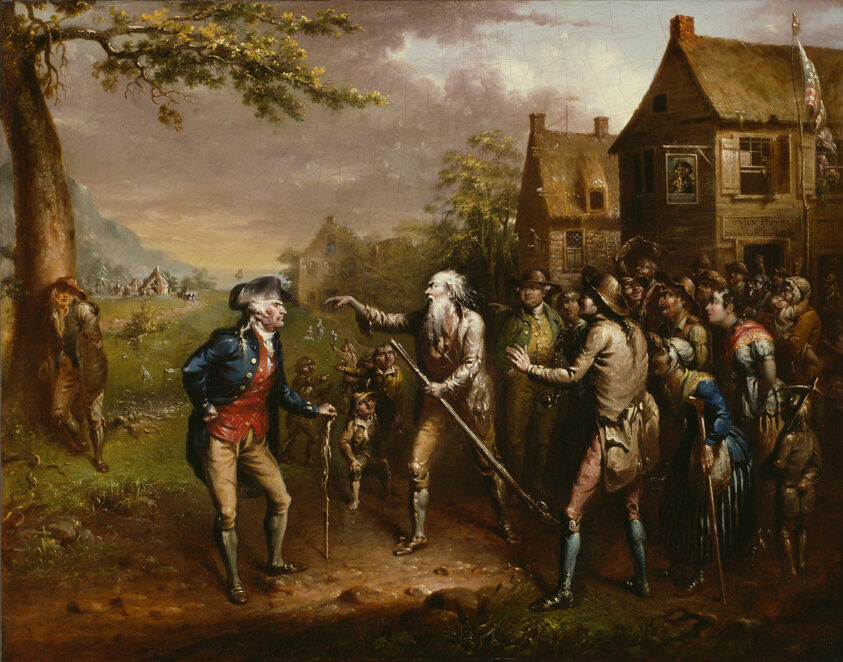
Seen in this light, George Frederick Bristow’s decision to compose an opera based on Washington Irving’s “Rip Van Winkle” was not provincial but prescient. Long before Dvorák’s arrival in New York, Bristow had already intuited that the stories and sounds of America itself — its literature, landscapes, and vernacular idioms — held the key to an authentic musical identity.
Bristow’s Rip Van Winkle can thus be understood as an early act of cultural independence — a parallel to what Verdi, Smetana, and Glinka were achieving in their own nations: transforming myth and folklore into art, and in doing so, defining what it meant to belong to a place through music.


Comments