


George Bridgetower's Academic Journey
- Eduardo Montes-Bradley

- 1 day ago
- 2 min read

When we talk about George Augustus Polgreen Bridgetower (1778–1860) we tend to leap from one dazzling highlight to another: the child prodigy who, at age ten, performed a Viotti concerto in Paris before an audience that included Thomas Jefferson, to the electrifying 1803 Vienna premiere of Beethoven’s Violin Sonata No. 9 in A major, Op. 47—the fiery work later rededicated as the “Kreutzer” Sonata after the famous falling-out between the two musicians.
Yet between these continental triumphs lies a rich, formative English chapter, centered in London and culminating in formal academic recognition at Cambridge, that reveals Bridgetower’s deep commitment to musical scholarship amid an already demanding professional life.
Roots in Haydn’s World
Bridgetower’s earliest years were steeped in the music of Joseph Haydn. His father worked in the household of Prince Nikolaus I Esterházy, and young George grew up immersed in the lavish musical culture of Eszterháza Palace, Haydn’s primary base as Kapellmeister. Contemporary advertisements even billed the prodigy as “a pupil of the worthy Haydn,” though scholars today regard this as promotional flourish—reflecting exposure and possible informal influence rather than structured lessons.
George Bridgetower's Academic Journey.
After settling in London in 1789, Bridgetower became a fixture of the city’s musical scene. He performed in over fifty major concerts, served as first violin in the Prince of Wales’s private orchestra, and taught violin and piano to elite pupils. London remained his home base throughout the period leading to his Cambridge degree—a non-residential qualification designed for established professionals, requiring no long-term campus stay.
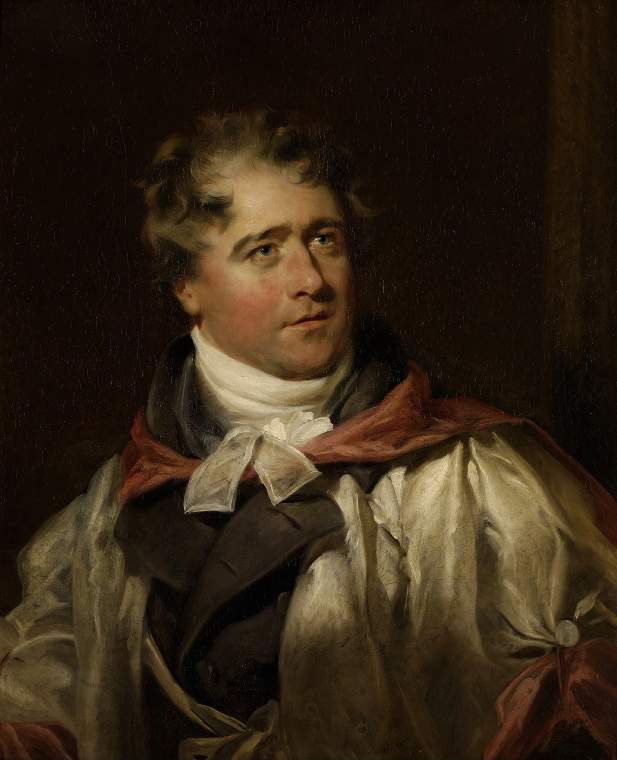
This Haydn connection echoed through a remarkable pedagogical chain. Bridgetower’s most influential mentor in England was Charles Hague (1769–1821), Professor of Music at the University of Cambridge. Hague had studied violin under Johann Peter Salomon, the celebrated impresario who persuaded Haydn to visit England in 1791–95 and organized the premieres of the “London” (or “Salomon”) Symphonies. A skilled composer and avid arranger of Haydn’s works, Hague organized more than fifteen public concerts in Cambridge featuring Bridgetower between 1795 and 1811. Their bond was close: in 1805 Bridgetower presented Hague with a portrait miniature of himself as a token of friendship.
Under Hague’s direct encouragement and supervision, Bridgetower pursued a Bachelor of Music (Mus.B.) at Trinity Hall, Cambridge—one of the university’s oldest colleges, founded in 1350. In June 1811 he earned the degree by submitting an original “exercise”—an elaborate choral-orchestral anthem performed publicly on 30 June in Great St. Mary’s Church before the university’s newly elected Chancellor. Contemporary reviewers praised its richness and singled out the beauty of its trio. Tragically, like many of Bridgetower’s compositions, the manuscript has vanished; we can only hope that one day it will resurface in some forgotten archive.
This Cambridge milestone, achieved in the stylistic shadow of Haydn through the Salomon–Hague line, marks Bridgetower as far more than a fleeting virtuoso. In an era when opportunities for musicians of African descent were severely limited, his earned academic credential stands as powerful evidence of extraordinary resilience, talent, and intellectual ambition.
Today Trinity Hall honors him with a dedicated room and ongoing research into his legacy—a quiet reminder that history’s most compelling stories are often found in its overlooked chapters.


Comments