


Before Copland and Gershwin: The First Documentary on 19th-Century American Classical Music
Updated: Jun 4
A film by Eduardo Montes-Bradley · Heritage Film Project
The first feature documentary ever made about 19th-century American classical music — a comprehensive portrait of the world of George Frederick Bristow.
When most Americans think of classical music with an American accent, they think of Aaron Copland's open prairies, George Gershwin's Rhapsody in Blue, or Leonard Bernstein's restless New York energy. The story, as it is commonly told, begins in the twentieth century. Everything before it is a prologue — vague, undocumented, assumed to be derivative of Europe.
That assumption is wrong. And this film — the first documentary ever made about 19th-century American classical music — is the evidence.
Enjoying this article? Subscribe to receive future essays on American culture, documentary film, classical music, public memory, and the arts.
Life and Music in the Age of George Frederick Bristow recovers a world that American cultural memory has systematically neglected: a New York alive with orchestras, opera companies, concert halls, and composers who were doing something genuinely new — not by rejecting the European tradition but by asking, urgently and without an easy answer, what it meant to make music in a democracy built from wilderness.
"I feel a desperate need to revisit the American past — to somehow find the roots that we lack. The study of 19th-century American music remains pretty much an untilled terrain. We were late to do it and we still don't do it sufficiently." — Leon Botstein

The Man at the Center
George Frederick Bristow was born in Brooklyn in 1825, the son of an English immigrant musician who named him after George Frederick Handel and hoped the weight of that name would be enough. It nearly was. By his early twenties Bristow was already established as a violin virtuoso, a teacher, and a conductor in the most competitive musical city in the Western Hemisphere. He would spend his entire career in New York — never studying in Europe, never leaving for Boston or Philadelphia — and in doing so he became the most completely American classical composer of his generation.
What distinguishes Bristow from the musicians surrounding him is not just his talent but his conviction. In 1854 he resigned from the New York Philharmonic — where he served as concertmaster — to protest the orchestra's systematic refusal to program American composers. The gesture cost him professionally. He returned eighteen months later. But the point had been made, publicly and at personal expense, in a way that no one in American musical life had made it before.
An immensely ambitious film — I know of no other like it. Necessary, courageous, and undertaken with remarkable enthusiasm and resourcefulness. — Joseph Horowitz
Bristow died in 1898 — literally in the classroom, having suffered a heart attack while teaching schoolchildren in lower Manhattan. One week after the premiere of his Fifth Symphony at Carnegie Hall, the Spanish-American War began and public attention shifted permanently toward a new century. The music he had spent fifty years writing was never performed again in his lifetime's cultural aftermath. It simply stopped.
The World He Inhabited
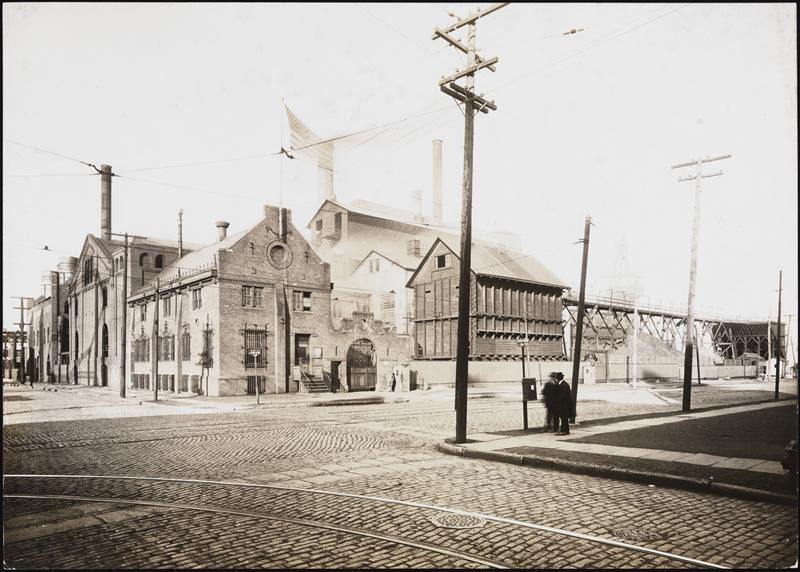
The film does not treat Bristow as an isolated genius. It situates him within one of the most extraordinary cultural ferments in American history — mid-19th century New York, a city being remade simultaneously by German immigration, Italian opera, Irish labor, cast-iron architecture, the rise of the modern piano, and the unsettled question of what a democratic nation was supposed to sound like.
German immigration was the largest wave of mid-century migration, and it brought with it something the city had never had: a population for whom serious music was not an aristocratic luxury but a community practice. Singing societies, chamber ensembles, and the seeds of what would become major orchestral institutions arrived with these immigrants. When the Germania Orchestra — first-rate young musicians fleeing the revolutions of 1848 — toured the United States, the impact was seismic. As Leon Botstein describes it: "This is an earthquake. These are first-rate young symphonic musicians and they constitute the first world-class orchestra that Americans ever heard."
The piano was being transformed in the same decades. The introduction of the cast-iron frame created an instrument of unprecedented power and reliability — one that, unlike the older fortepiano, did not go out of tune every morning. The democratization this produced was profound. Music that had required either rare talent or expensive instruments was suddenly available to the parlor, the schoolroom, the church. A new public for serious composition was forming precisely as Bristow was writing for it.

The Astor Place Riot and the Question of Identity
On May 10, 1849 — two months after the inauguration of President Zachary Taylor — a riot erupted outside the Astor Place Opera House that left at least twenty people dead. What began as a rivalry between a British and an American interpretation of Shakespeare became, in the space of an evening, a confrontation between cultural traditions, class allegiances, and competing visions of what American identity meant.
Bristow, then in his mid-twenties and already established in New York's concert life, would almost certainly have been close to these events. The argument being fought in the streets — who owned culture, who it was for, what counted as American — was the same argument he was conducting on the concert stage. The film frames the riot not as a digression but as the political temperature of the artistic world Bristow navigated.
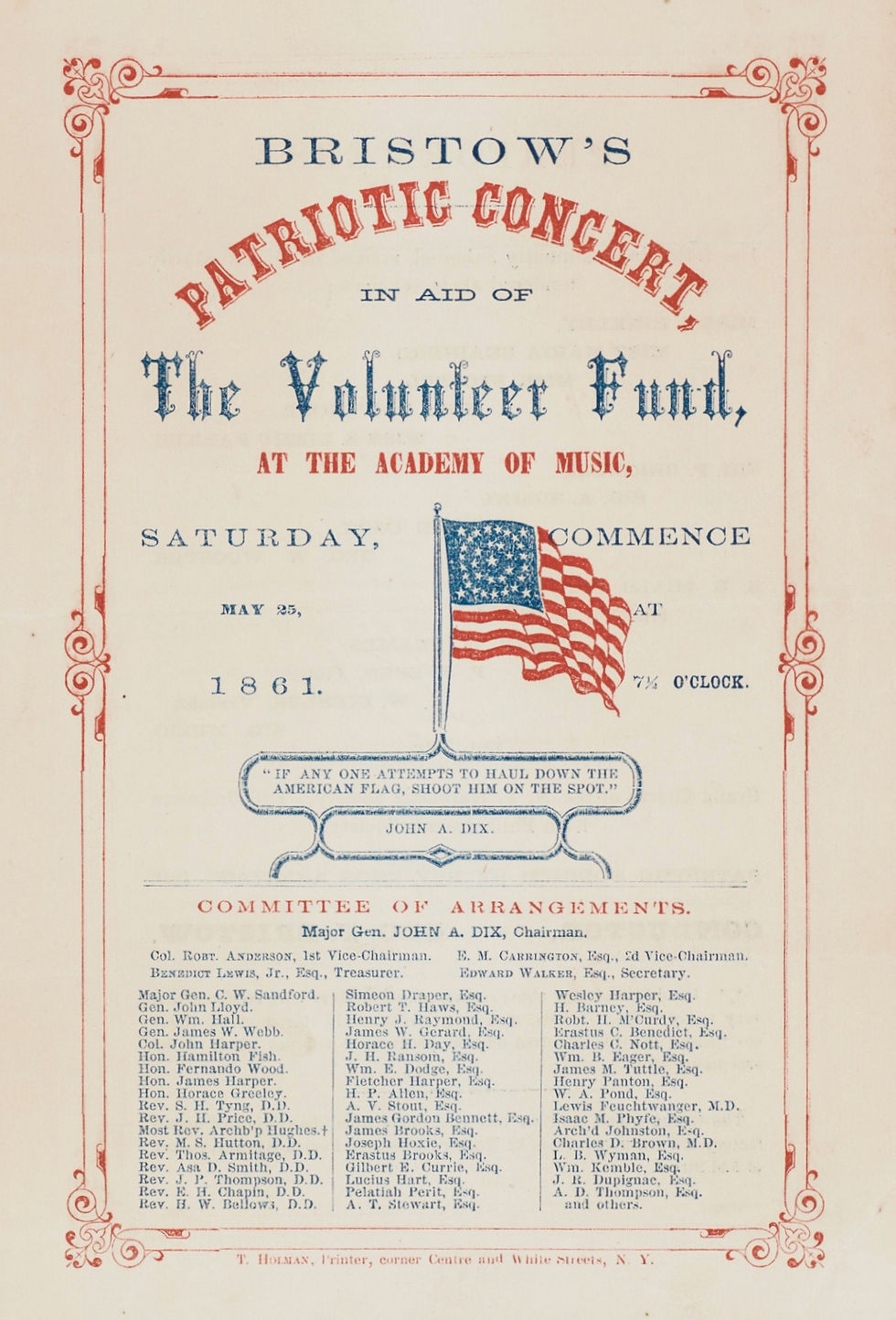
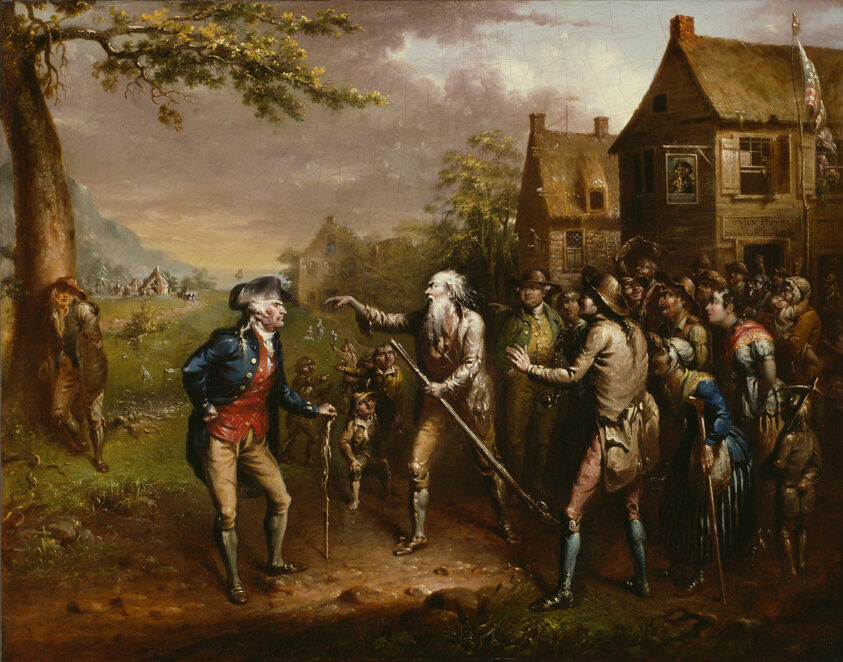
The question of what American music actually was remained genuinely unresolved. Was it music on American subjects — as in Bristow's opera Rip Van Winkle, the first opera based on an American story, which premiered in New York in 1855? Was it music that incorporated the sounds of the continent's diverse populations? Or was it simply whatever serious musicians in America happened to write? The film does not resolve this question. It holds it open, as the 19th century held it open, and lets the tension drive the argument.
The Symphonies
At the heart of the film are the symphonies — and particularly the Fourth and Fifth, which represent Bristow's most ambitious engagement with the question of American identity in music.
The Arcadian Symphony opens with a solo viola — an almost unprecedented gesture in the symphonic literature. That solo voice returns twice in the first movement, each time carrying what conductor and scholar Kyle Bartlett describes as the image of "an American going out into the wilderness by himself." The second movement incorporates Thomas Tallis's Evening Hymn, played first by a brass quartet with Protestant solemnity, then surrounded by flutes and string figures that suggest — in Bartlett's vivid description — "butterflies and lightning bugs." A family moving west. A continent being imagined.
The Niagara Symphony, his Fifth, is larger still — a Mahler-scaled vision of American abundance, with a choral fourth movement echoing Beethoven's Ninth and a third movement that reaches explicitly toward African-American musical traditions. It premiered at Carnegie Hall on April 11, 1898. One week later the Spanish-American War began. The audience that might have carried Bristow's music into the new century was already looking elsewhere.
"It was exciting for me and for the players to learn and put on the stage. A very well-written, very beautiful piece of music that told something about America's image of itself — a triumphant, confident America which no longer exists."— Leon Botstein
The Voices in the Film
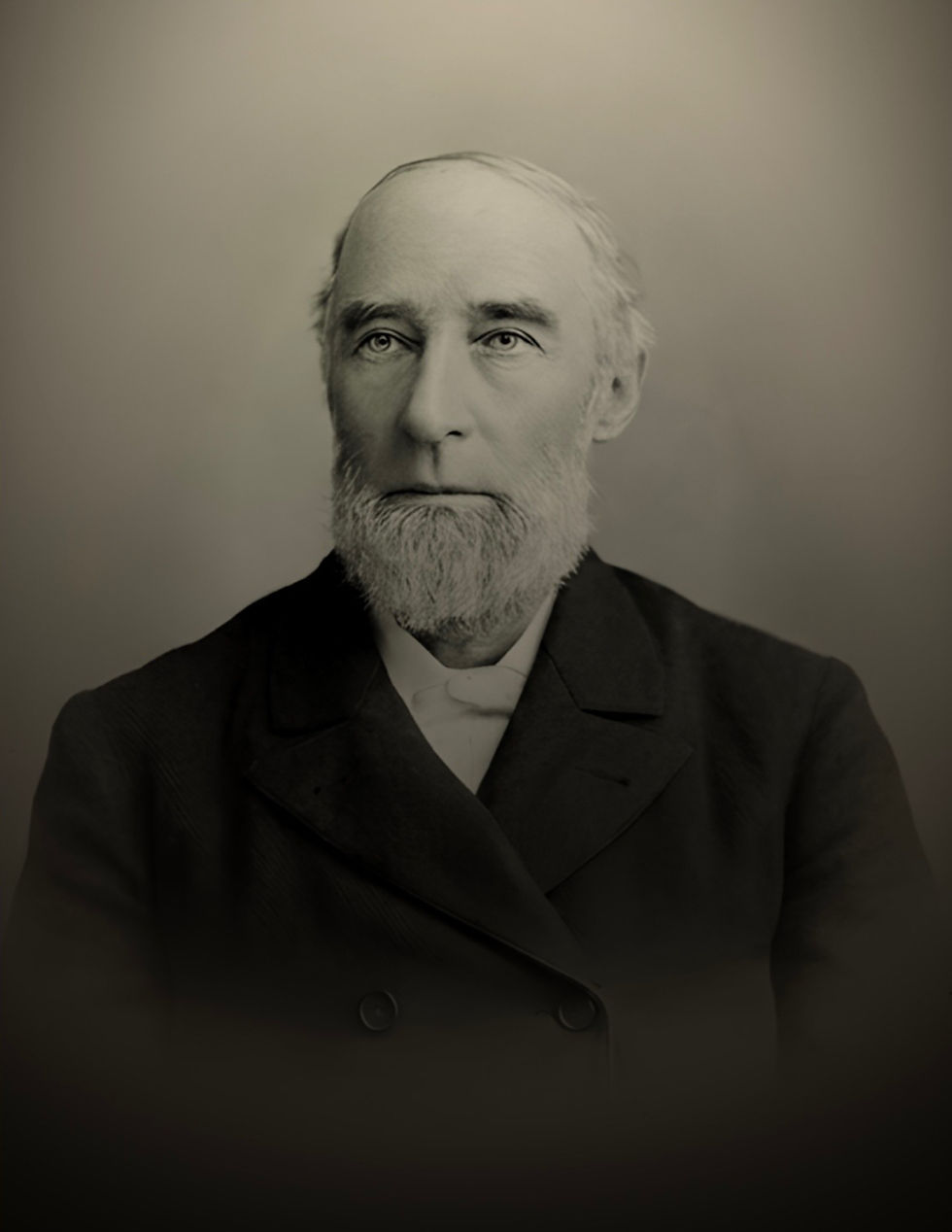
The film builds its argument through voices formed in different intellectual traditions — historians, musicians, conductors, scholars — who do not all agree, and whose disagreements are part of the point. The two anchoring presences are Leon Botstein, conductor and president of Bard College, and Joseph Horowitz, music historian and one of the foremost advocates for the recovery of 19th-century American repertoire. Together they frame the central question: not just who Bristow was, but why he disappeared, and what that disappearance cost.
Horowitz has spent decades arguing that American classical music took a wrong turn after the First World War — that the project of building an American canon, which Bristow and his contemporaries pursued with genuine ambition, was abandoned in favor of European repertoire conducted by European maestros. "The iconic figure," he notes, "was Arturo Toscanini — not even an American citizen. The composers were traveling in a backseat. They knew it. They resented it."
Botstein brings a different angle — the frustration of a musician who has spent his career programming music that institutions refuse to take seriously. His opening statement sets the film's tone: "We live in a country that's notorious for not remembering its past. Never before has the United States been as pastless as it is right now."
A Living Thread
The film does not end in the past. On January 30, 2026, Bristow's Niagara Symphony was performed at Carnegie Hall for a new generation of New Yorkers — including students from PS George Frederick Bristow in the Bronx, who arrived that evening to hear, for the first time, the music behind the name of their school.
That image — children from one of the most diverse neighborhoods in the world sitting in Carnegie Hall listening to the symphony of a Brooklyn-born composer who died in their borough — is not a sentimental footnote. It is the film's argument made visible. The tapestry Bristow wove from wilderness hymns, German harmonics, Italian operatic forms, and the democratic energy of mid-century New York was never finished. It is still being extended, thread by thread, by the city he never left.
"Far from a relic, George Frederick Bristow has become part of the fabric — one thread in an ever-evolving tapestry that a century later has given the world some of the most extraordinary music it has ever known."
WITH GRATITUDE
Life and Music in the Age of George Frederick Bristow was made possible through the
generous support of our patrons and funders, whose commitment to the recovery of
American cultural memory made this film possible.
We extend our deepest thanks to The Joseph and Robert Cornell Memorial Foundation
and The Morris and Alma Schapiro Fund for their invaluable support.
Our gratitude also goes to Katherine Preston, Rufus Collins, Dale Cockrell,
Neely Bruce, Kyle Gann, John Graziano, musicians, scholars, and institutions
whose participation gave this film its depth and its argument.
Leon Botstein Joseph Horowitz Katherine Preston Neely Bruce John Graziano Kyle Gann
Coming Next from Heritage Film Project
We are currently in production on Sonata Mulattica — our next documentary exploring the life and music of George Polgreen Bridgetower, the Afro-European violin virtuoso for whom Beethoven originally composed his Kreutzer Sonata, before a quarrel over a woman ended their friendship and erased Bridgetower's name from history.
If Bristow's story is about what America forgot, Bridgetower's is about what Europe chose not to remember. The two films belong to the same argument.
Subscribe to The Journal to follow the production and be the first to hear when Sonata Mulattica is ready.


Comments