


Sayonara Mister Bristow: Not enough room in the Pantheon for all American composers. The paradox of Natural Selection and Memory.
Updated: Apr 29

Life and Music in the Age of George Frederick Bristow is not a documentary aimed at canonizing the composer.
I intended to make a biography. The working title was simply George Bristow, and the plan was straightforward: rescue a forgotten American composer from the obscurity into which history had carelessly dropped him, and let audiences discover what they had been missing. Along the way, something went wrong.
But somewhere in the process — in the archives, in the scores, in the scholarship that has been devoted to his rehabilitation — I arrived at an uncomfortable realization: Bristow did not particularly interest me. Not as a man. Not as a composer.
I want to be careful here, because this is easily misread. I am not saying Bristow was without merit. He was, by every reasonable measure, an admirable human being. A good composer. A devoted teacher. A reliable colleague. A faithful husband. A conscientious citizen who gave forty-four years of his life to teaching music in the New York public schools. He played violin in the Philharmonic for the better part of four decades. He wrote five symphonies, an opera, oratorios, and chamber works. He was respected in his time and genuinely mourned at his death.
What he was not was unforgettable. And I think that distinction deserves to be said out loud, because it changes the nature of the film — and perhaps explains something about why America forgot him in the first place.
We tend to assume that forgotten figures were forgotten by accident, or by injustice, or through the careless operations of cultural prejudice. Sometimes that is true. But I have come to suspect that forgetting is more often a form of accuracy — and that the question worth asking about Bristow is not only why we lost track of him, but whether the answer might lie in something true about the work itself.
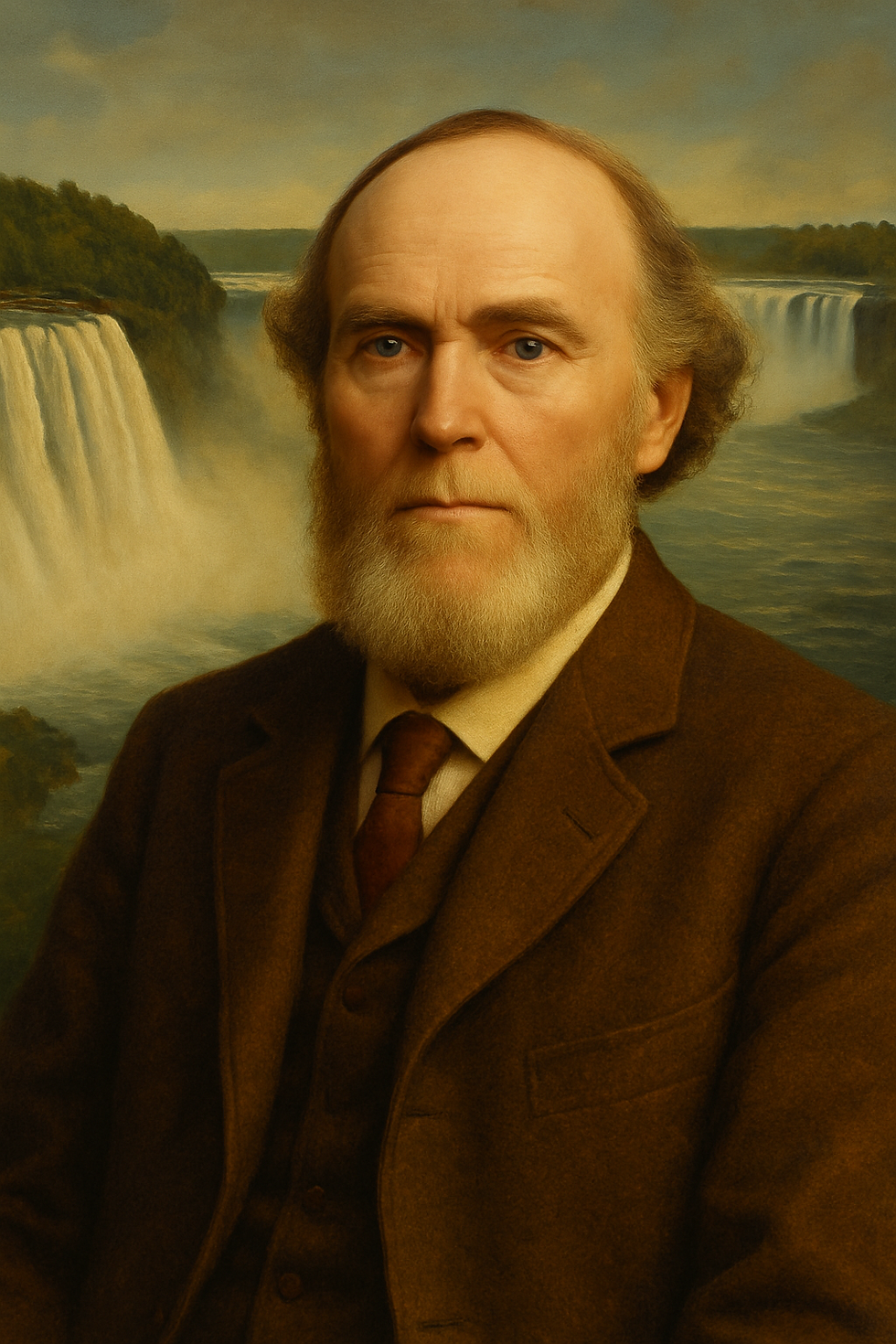

At the Pantheon of American composers, room is limited, and Bristow did not have a reservation.
Consider what we call the canon. We speak of it as a hall of fame, a structure built to honor the deserving. But I think it functions as something else entirely: a roadmap. Societies construct canons not primarily to celebrate but to orient themselves, to establish usable landmarks on the long road of civilization’s progress. A canon that included everyone would be no canon at all. How large would the pantheon need to be to accommodate every worthy figure? How many stars fit on Hollywood Boulevard before the stars stop meaning anything?
Bristow’s absence from the canon, seen in this light, is not an injustice. It is the canon working exactly as intended — ruthlessly, efficiently, and not without a certain cold logic. He was good. He was not indispensable. And indispensability, not goodness, is what the canon requires.
His most celebrated moment — resigning from the New York Philharmonic in protest over its refusal to program American composers — was a principled stand. It was also, when you listen closely to his music, a stand made partly on behalf of works that sounded like Mendelssohn and Beethoven composed at a slight remove. The European-trained audiences who filled New York’s concert halls were not wrong to want the originals. They were not being unfair to Bristow. They were being honest.
What the film became, then, is something closer to an ontological autopsy — an examination of the remains of a life not to celebrate or condemn, but to understand the conditions that produced it and ultimately allowed it to be forgotten. That autopsy, it turns out, reveals less about Bristow than about the era that shaped him. And the era is extraordinary.
The New York he inhabited — immigrant, restless, culturally insecure, desperate to define itself against the overwhelming prestige of European civilization — is one of the most fascinating worlds I have encountered in over thirty years of documentary research and filmmaking. The argument he was part of, about what American music should sound like and who it should serve and whose tastes it should honor, is not settled. It is still ongoing. We are still having it.
Bristow was not the hero of that story. But he was present for it, shaped by it, and in the end a casualty of the same forces that made it so compelling. That made him, paradoxically, more useful to me than a genius would have been. A genius is exceptional by definition. Bristow was representative. And representation, in documentary filmmaking, is often worth more than exceptionalism.
I emerged from this experience not as a Bristow convert. His biography failed to convince me. But he guided me, patiently and without complaint, through a century I had always wanted to understand better. The ontological autopsy of his life and career revealed, in the end, not the tragedy of a man unjustly forgotten, but something more instructive: the logic of a society deciding, with neither malice nor ceremony, what it needed to remember — and what it could afford to let go.
For that education, I owe Bristow more than I can easily say.
Life and Music in the Age of George Frederick Bristow (2026) was made possible with the support of the Joseph and Robert Cornel Fundation, and the Morris and Alma Schapiro Fund. A production of the Heritage Film Project, fiscally sponsored by the Documentary Film Fund, a 501(c)(3) organization. Subscribe to the blog for more content on current productions.


Comments