


Carlos María Ocantos: How the Gay Argentine Writer Was Erased from Literary History

165 years after his birth, new evidence suggests Argentina's most accomplished 19th-century novelist was deliberately forgotten due to his sexuality
On January 30, 1956, in a Madrid cemetery, a mysterious Argentine woman watched as gravediggers exhumed a coffin from niche 34. The body inside belonged to Carlos María Ocantos, a writer who had died seven years earlier in obscurity, despite having authored 37 volumes and earning recognition from Spain's most prestigious literary circles. What I discovered during four years of research across four countries reveals not just one of Latin American literature's most puzzling cases of collective amnesia, but potentially one of its earliest examples of systematic homophobic erasure.
The Accusation That Changed Everything
The smoking gun lies buried in diplomatic archives: a venomous 1917 letter from Andreas Henningsen, former Argentine consul in Copenhagen, to the Foreign Ministry in Buenos Aires. Henningsen, whom Ocantos had dismissed for secretly working as a Danish intelligence agent, struck back with calculated cruelty. His accusations against his former boss were threefold: "1. His private life; 2. His quarrelsome character; 3. His sister."
The "private life" referred to Ocantos's relationship with Bernardo Costa Millet, described by Henningsen as his "private secretary" and "Galician." Henningsen painted a picture of two men living together "devoted to sin in parks and pensions of the Danish capital." In 1917, this was tantamount to a death sentence for any public figure's reputation.
The attack was systematic and personal. Henningsen called Costa Millet a "poor wretch without education, bad manners, ugly and foolish," while describing their relationship as "a shame for the young Argentine nation." This wasn't mere diplomatic rivalry—it was character assassination designed to destroy Ocantos's career and legacy.
The Evidence of a Life Partnership
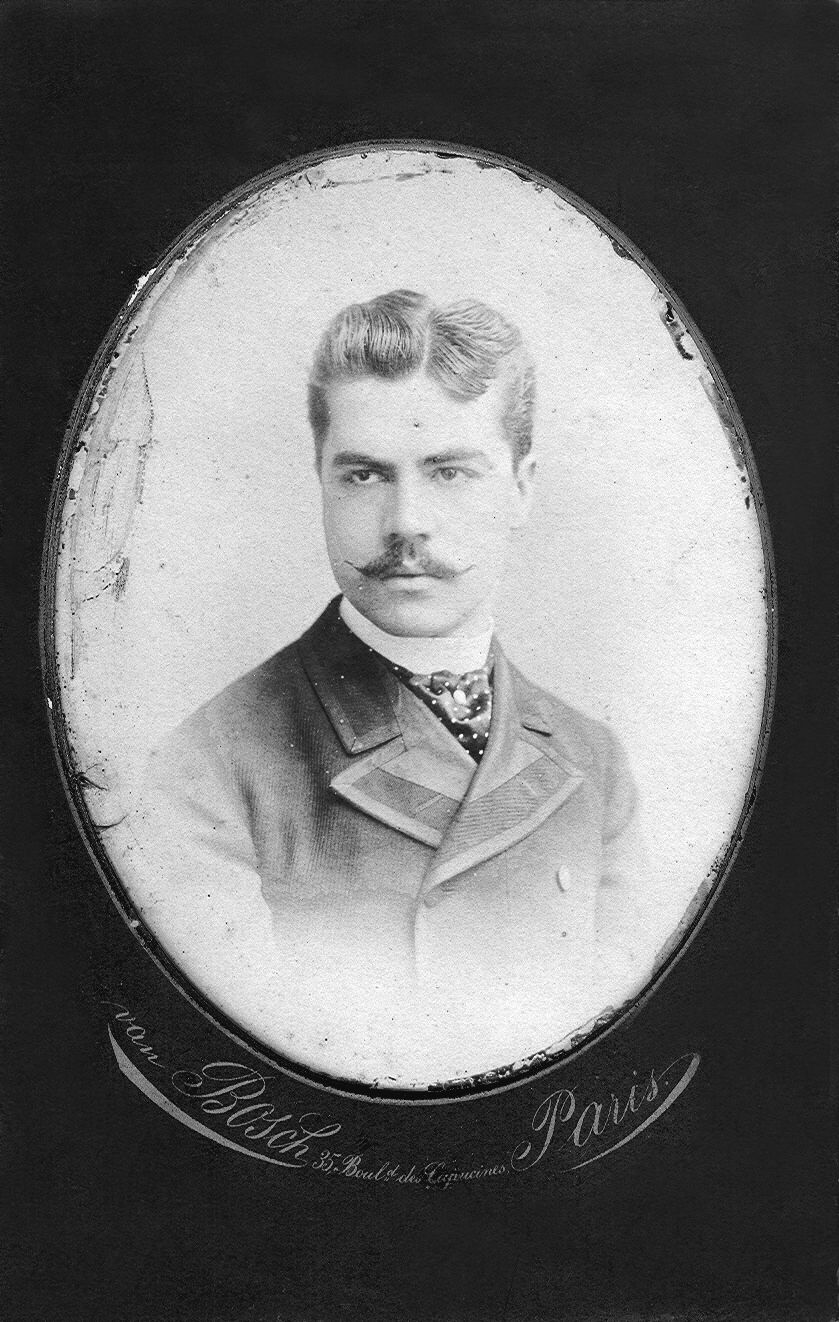
My research reveals that Costa Millet was far more than a secretary. He had assisted Ocantos in his literary work for years, helping with research and translation for the Fru Jenny series about Danish society. They lived together openly in Copenhagen from 1909 to 1918, sharing not just domestic space but intellectual collaboration.
When Ocantos defended himself in February 1917, he didn't deny the relationship's nature but rather emphasized Costa Millet's professional contributions. His carefully worded response suggests a man protecting both his career and his partner from a homophobic establishment. The fact that they continued living together until Ocantos's death in 1949 speaks to a partnership that lasted over four decades.
The Literary Detective Work That Revealed the Truth
What makes this discovery particularly compelling is how it illuminates Ocantos's own literary work. His novels are filled with coded references to real people and places, a game he explicitly acknowledged: "It would be a fine thing if the author didn't change names and know how to throw off malicious curiosity that likes to filter between the lines to discover intentions and lift the mask from characters!"
His fictional town "Alharaca" was clearly Aravaca, where he built his villa "Buen Retiro." His characters often lived unconventional domestic arrangements, and his writing consistently championed women's rights and questioned traditional social structures. Reading his work through this lens reveals a gay sensibility operating within the constraints of his era.
Most tellingly, his autobiographical story "¡Qué solos se quedan... los vivos!" (How Alone the Living Remain!) describes an elderly man returning to Buenos Aires to find himself a stranger in his own country. The narrator speaks of loves that prevented him from ever returning, of secrets that couldn't be revealed. This wasn't just about geography—it was about identity.
The Vanishing Act: How Literary Histories Are Written
Ocantos should be a household name in Argentina. Born on May 20, 1860, he was the son of a founding father, grandson of German immigrants, and witness to his nation's transformation. His twenty-volume Novelas Argentinas series, written between 1888 and 1929, chronicles Argentine society with the thoroughness of Balzac's Human Comedy. The Spanish press called him "one of the best American novelists, and one of the good ones among those writing in Spanish."
Yet ask any Argentine literature professor about Ocantos today, and you'll likely get a blank stare—or at best, mention of a single novel, Quilito, studied not for its literary merits but as a historical document of the 1890 financial crisis. This erasure wasn't accidental; it was systematic.
The mechanism of forgetting becomes clear when you trace Ocantos's reception history. Early critics like Roberto F. Giusti dismissed him as writing "Spanish novels whose plot unfolds in Buenos Aires," ignoring the sophisticated social analysis beneath the surface. Rubén Darío's casual dismissal—that Ocantos wrote "absolutely Spanish novels"—became literary orthodoxy.
But these weren't aesthetic judgments; they were cultural policing. In an emerging nation anxious about its identity, a cosmopolitan gay writer living abroad became an embarrassment to be minimized. The accusations of 1917 provided the perfect excuse to begin the process of forgetting.
The Impressionist Connection and International Recognition
What makes this erasure particularly tragic is the caliber of Ocantos's international connections. In 1874, at age 14, he was photographed at Paul Nadar's studio on Boulevard des Capucines during the first Impressionist exhibition. He literally stood among the cultural revolutionaries of Paris at one of art history's pivotal moments.
Later, in Madrid's literary circles, he befriended Benito Pérez Galdós, Juan Valera, and José María de Pereda. His residence became a gathering place where he demonstrated considerable skill as both host and cook, using hospitality as cultural diplomacy. In 1897, at age 37, he was elected corresponding member of the Royal Spanish Academy, presented by the three giants of Spanish literature.
The contrast couldn't be starker: internationally recognized and celebrated, domestically invisible and ultimately erased.
The Henningsen Affair: Espionage and Homophobia
The 1917 scandal reveals layers of intrigue that read like a spy thriller. Andreas Henningsen was simultaneously serving as Argentine consul and Danish intelligence agent, feeding information to Copenhagen about Argentine diplomatic activities. When Ocantos discovered this double loyalty and dismissed him, Henningsen launched a coordinated attack.
The timing was crucial. World War I had made questions of loyalty paramount, and homosexuality was increasingly pathologized by early 20th-century psychiatry. Henningsen's accusations weaponized both nationalism and homophobia against Ocantos.
The diplomatic correspondence shows Ocantos fighting a two-front war: defending Argentina's interests against German expansion in Denmark while simultaneously defending his personal life against character assassination. His nuanced reports on Danish politics and the woman's suffrage movement reveal a sophisticated political mind, yet these contributions were overshadowed by whispered accusations about his private life.
Writing Under Fire: The Civil War Years
Perhaps the most dramatic chapter of Ocantos's life unfolded during the Spanish Civil War. At age 77, living in his villa in Aravaca, he found himself literally on the front lines of the Battle of the Coruña Road. As artillery shells fell around his home in January 1937, he continued writing, finishing his novel La amazona del amor "between the shrapnel that rained from all sides."
This image—an elderly gay Argentine writer, driven from his bombed house with his longtime partner, clutching a manuscript while Spanish Republicans and Nationalists fought for control of Madrid—captures something essential about 20th-century LGBTQ+ experience: the persistence of creative work despite impossible circumstances.
His final novels, written in exile from his destroyed home, take on new meaning when read as the work of a man who had spent decades hiding in plain sight. The themes of displacement, secret love, and social hypocrisy that run through his later work weren't just literary devices—they were lived experience.
The Mystery of the Missing Body
Even in death, Ocantos couldn't escape the conspiracy of silence. According to official records, his body was exhumed from Madrid's San Justo Cemetery in 1956 and repatriated to Buenos Aires. Yet when I investigated the family vault in Recoleta Cemetery, there was no trace of him. The mysterious Argentine woman who witnessed the exhumation—identified only as "Señora Ramos"—vanished along with Ocantos's remains.
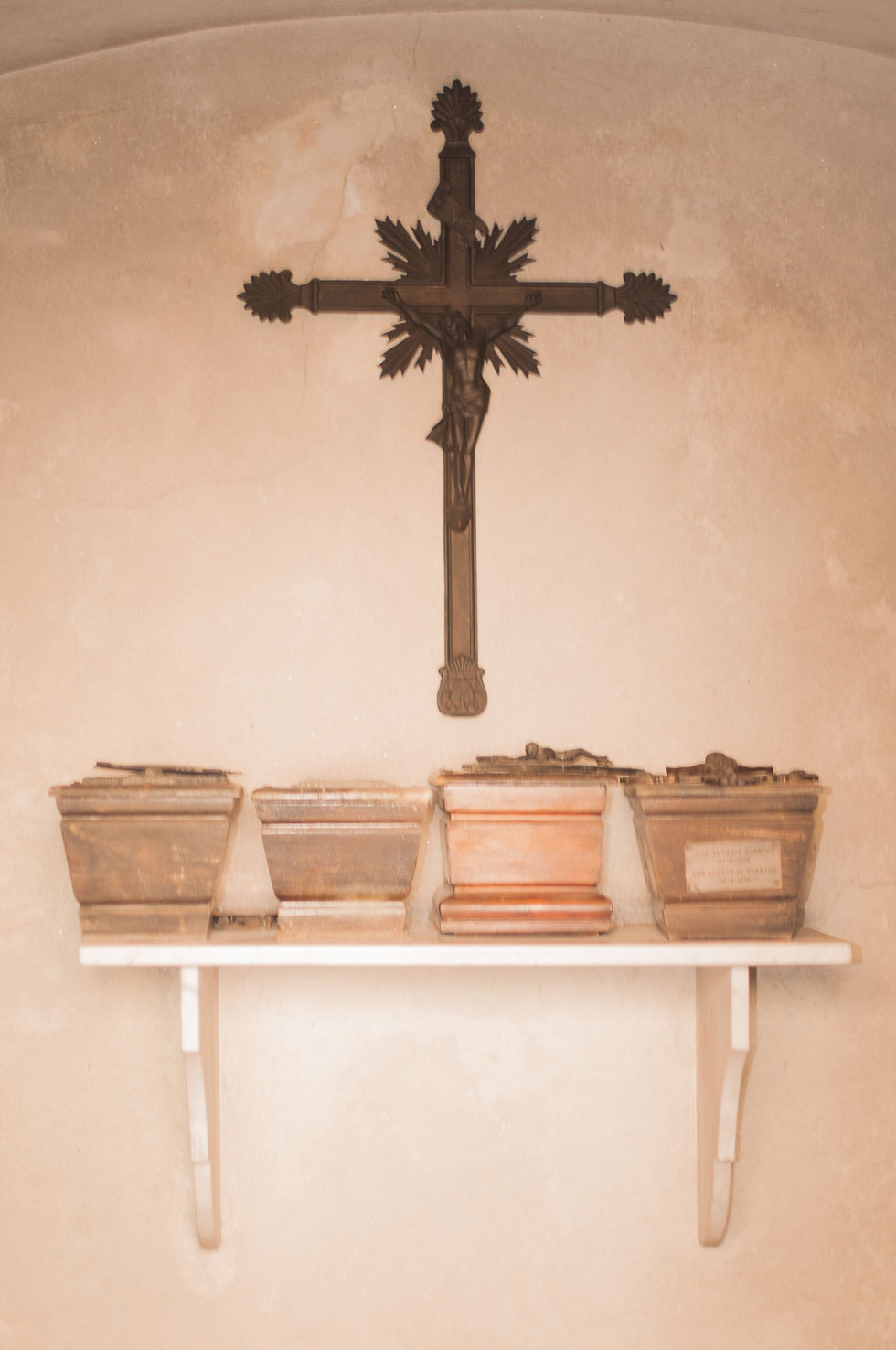
This absence seems fitting for a writer who spent his career as a literary ghost—present in Spanish literary circles, recognized by critics, but somehow invisible to his own country's cultural memory. The missing body becomes a metaphor for missing histories, for the LGBTQ+ lives systematically excluded from national narratives.
Decoding the Hidden Archive
Four years into this research, I've uncovered a vast hidden archive: love letters disguised as diplomatic correspondence, literary works encoded with queer subtext, and a domestic partnership that lasted four decades despite social hostility. The material reveals not just a forgotten writer, but an entire hidden culture of early 20th-century LGBTQ+ expatriates living and working across international boundaries.
Ocantos's careful encoding of real people and places in his fiction wasn't just literary technique—it was survival strategy. His challenge to readers to decode his work becomes poignant when understood as a gay man's invitation to recognition by those capable of seeing past heteronormative assumptions.
The Danish novels take on particular significance as documents of a brief period when Ocantos and Costa Millet lived relatively openly. Fru Jenny isn't just about Danish politics; it's about the possibilities of different social arrangements, the ways societies can evolve beyond traditional constraints.
The Contemporary Relevance
In our current moment of cultural recovery and historical revision, Ocantos's story offers crucial insights into how homophobia shapes literary canons. His erasure wasn't the result of aesthetic judgment but systematic exclusion based on sexual identity. The same mechanisms that operated against him continue to influence which writers are remembered and which are forgotten.
Recent scholarship on queer literary history has focused primarily on North American and European contexts. The Ocantos case suggests that Latin American literary history contains similar hidden narratives waiting to be uncovered. How many other accomplished writers were deliberately forgotten because they didn't conform to heteronormative expectations?
The international nature of Ocantos's career also speaks to contemporary issues around citizenship, belonging, and cultural identity. As a diplomatic writer living between nations, he navigated questions of loyalty and authenticity that resonate with today's discussions about transnational identity and global citizenship.
The Patient Ghost and the Unfinished Documentary
As I write this on the 165th anniversary of his birth, the documentary remains unfinished, funding elusive, and Ocantos's story largely untold. But perhaps that's appropriate for a man who spent forty years writing novels that few read, driven by the belief that literature matters even when the world isn't listening.
The project exists in the same limbo as its subject—too queer for traditional literary scholarship, too literary for LGBTQ+ activism, too Argentine for Spanish audiences, too Spanish for Argentine ones. But this in-between status may be precisely what makes the story urgent now.
Ocantos understood something crucial about the relationship between art and identity: that authentic expression often requires exile, that the most important truths are frequently the most unwelcome ones. His patient persistence in the face of indifference and hostility offers a model for how marginalized artists can maintain their integrity while waiting for recognition.
The Evidence Accumulates
The case for Ocantos's rehabilitation rests on more than speculation. Diplomatic archives, literary analysis, biographical evidence, and cultural context all point toward a systematic campaign of erasure based on sexual identity. The Henningsen accusations weren't just personal attack—they were cultural enforcement, designed to maintain heteronormative boundaries around national literature.
Recent discoveries continue to support this thesis. Private correspondence, witness accounts, and comparative analysis with other international LGBTQ+ writers of the period all suggest that Ocantos's homosexuality was an open secret among his contemporaries, tolerated in cosmopolitan Madrid but weaponized by his enemies when convenient.
The fact that he maintained a forty-year partnership with Costa Millet, continued working productively until his death at 89, and left behind a massive literary legacy suggests a man who found ways to live authentically despite social constraints. His story offers hope for other hidden histories waiting to be uncovered.
Ocantos Is Still Waiting
Some stories demand to be told, regardless of whether they find an immediate audience. Carlos María Ocantos understood this better than anyone—he spent four decades writing novels that challenged social conventions, knowing that recognition might come only posthumously. His patience may finally be rewarded as scholars and readers become more sophisticated about the intersection of sexuality and literary history.
The trail leads from Buenos Aires archives to Copenhagen diplomatic records, from Madrid cemetery files to Danish intelligence reports. Each piece of evidence adds weight to the argument that one of Latin America's most accomplished novelists was systematically erased from literary history because of his sexual identity.
Whether this research becomes a documentary, an academic study, or simply a recovered memory matters less than the recognition itself. Ocantos spent his life writing between the lines, encoding truths for future readers capable of deciphering them. Perhaps that future has finally arrived.
Carlos María Ocantos was cancelled before the word existed, erased by the same forces that continue to marginalize LGBTQ+ voices today. His story offers both warning and inspiration: the mechanisms of forgetting are powerful, but the impulse to create and document authentic experience proves ultimately stronger.
He's still waiting, patient as ever, for his story to be told.
The Literary Legacy: 37 Volumes of Forgotten Brilliance
The scope of Ocantos's erasure becomes even more staggering when you consider his prolific output. Over six decades (1883-1943), he published 37 volumes, including his monumental 20-volume Novelas Argentinas series that chronicles Argentine society from the 1880s through the 1920s:
Novelas Argentinas
La cruz de la falta (1883)
León Saldívar (1888)
Quilito (1891)
Entre dos luces (1892)
El candidato (1893)
La Ginesa (1894)
Tobi (1896)
Promisión (1897)
Misia Jeromita (1898)
Pequeñas miserias (1900)
Don Perfecto (1902)
Nebulosa (1904)
El peligro (1916)
Riquez (1914)
Victoria (1922)
La cola de paja (1923) - Winner of Royal Spanish Academy Gold Medal
El secreto del Doctor Barbado (1926)
Tulia (1927)
El emboscado (1928)
Fray Judas (1929)
International Series:
Fru Jenny: Seis novelas danesas (Six Danish novels)
El camión: Seis novelas españolas (Six Spanish novels, 1922)
El locutor: Seis novelas cortas (Six short novels, 1928)
Story Collections:
Sartal de cuentos (1907)
Mis cuentos (1904)
Carmucha: Nuevas novelas cortas (1931)
En el más allá... Más novelas cortas (1933)
La princesa está alegre: Últimas novelas cortas (1935)
Floreteo: Segunda serie de novelas cortas (1942)
Final Works:
La amazona del amor (1936) - completed under bombardment during the Spanish Civil War
Entre naranjas (1942)
El avionema del Diablo (1943)
This extraordinary bibliography represents one of the most comprehensive literary projects in Latin American letters—a systematic attempt to document an entire society in transformation. That such a massive, critically acclaimed body of work could be systematically erased from cultural memory speaks to the power of homophobic gatekeeping in shaping literary canons.
Ocantos didn't just write novels; he created an encyclopedia of Argentine life disguised as fiction. His disappearance from literary history represents not just personal injustice, but cultural amnesia on a massive scale.
Eduardo Montes-Bradley is the author of "La resurrección de Carlos María Ocantos" and has spent five years researching the writer's life across Argentina, Brazil, Spain, and Denmark.

Comments